About Andrew Curley
Yá’át’ééh. Shí éí Andrew Curley yinishyé. Biligáana nishłį́, Honágááhni bashishchiin, Biligáana dashicheii dóó Kin’yaa’áani dashinalí.
Andrew Curley was born in Gallup, New Mexico, and came of age growing up in Albuquerque, Window Rock, Houck, and Phoenix. That experience of navigating different communities and environments informs his identity as a Navajo citizen, educator, and researcher. Andrew came to understand the Navajo Nation not just from one chapter or one agency, but from across the region and beyond; living and working in the border towns and cities where so many Diné make their lives. That broad perspective is a strength he will bring to the presidency.
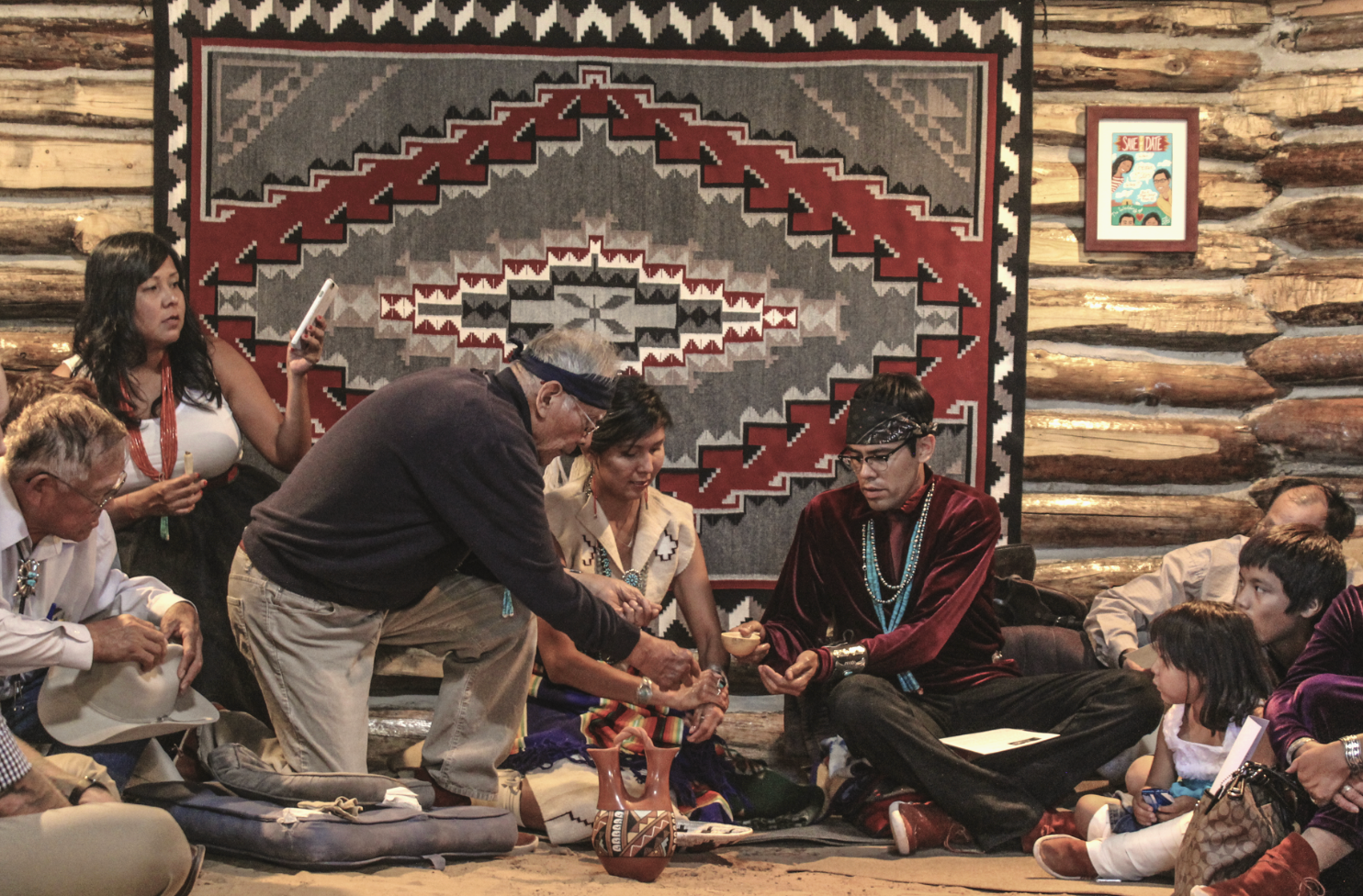
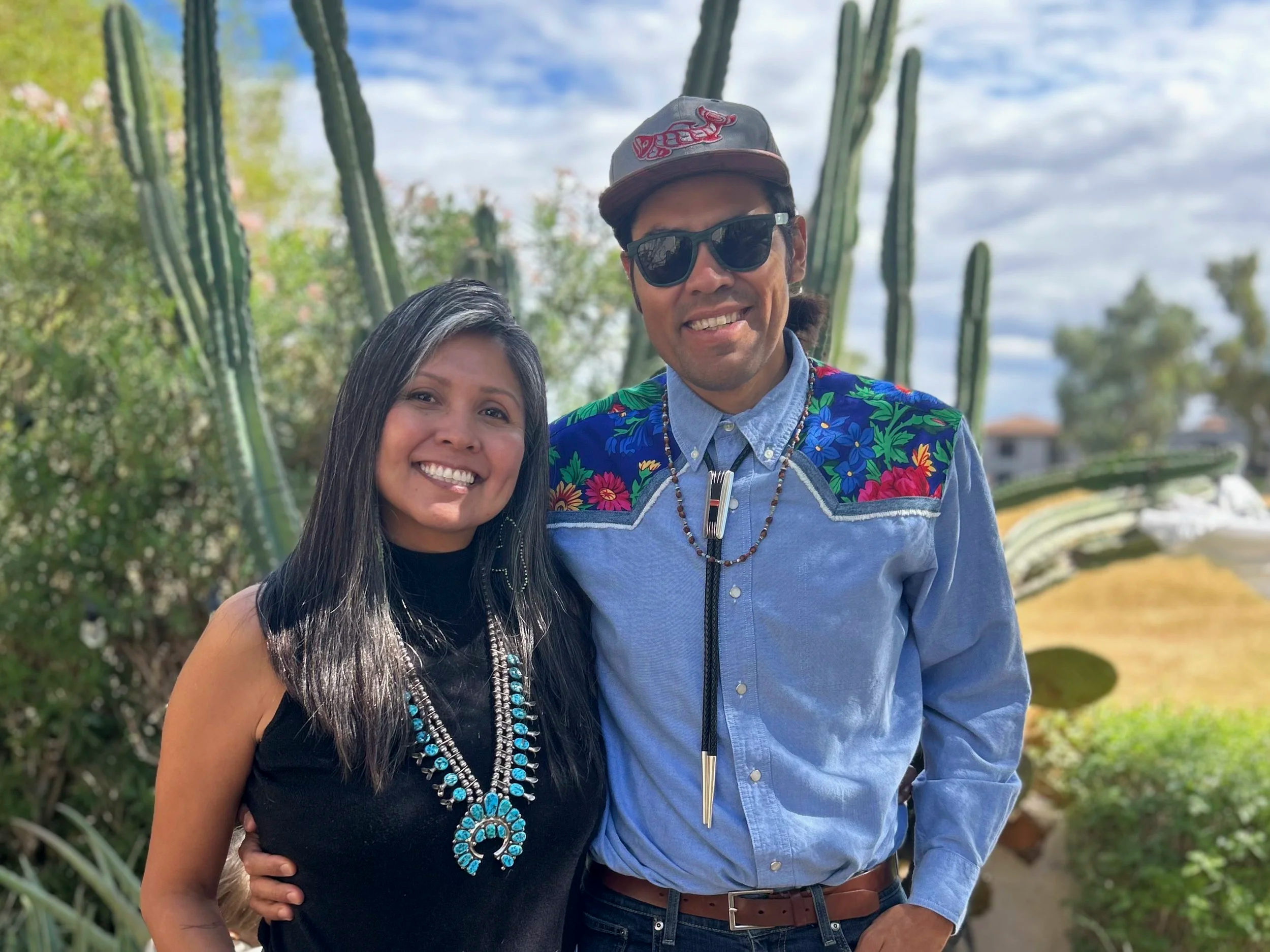
His mother is Paula Hale, and his father is Lorenzo Curley of Houck Chapter, who has dedicated his career to the Navajo Nation, serving as a long-time attorney, as well as a dedicated policymaker and Navajo Nation Council Delegate. Andrew has been married for ten years to Nanibaa Beck, an accomplished jeweler from Pinon, Arizona, whose late parents, Eleanor and Victor Beck Sr., were also celebrated jewelers and entrepreneurs who built their lives and livelihoods both on and off the Navajo Nation. Andrew's mother, Paula was also married to the late Albert Hale, the second President of the Navajo Nation and a fierce advocate for tribal sovereignty. Throughout his life, Andrew has been inspired by leaders in his close family and community.
Andrew's commitment to the Navajo Nation has always been grounded in listening, and in showing up without being asked. After graduating from college, he worked as a reporter for the Navajo Times, learning to ask the right questions and, more importantly, meeting and talking with a wide variety of Diné people across the Nation. He went on to serve as a Research Assistant at the Diné Policy Institute in Tsaile, Arizona, where he contributed to the Navajo Nation Government Reform Project, a formal effort commissioned by the Speaker of the Navajo Nation Council to research alternative models of governance and strengthen how the Nation serves its people. He also served two years on the Navajo Nation Commission on Government Reform, not because it was required, not because he was paid, but because he believed in doing the work for betterment of the Navajo Nation. That patient effort, sitting with community members, elders, activists, policy makers, and tribal government officials, continues to shaped his understanding that good leadership begins with genuinely hearing and learning from those you serve.
That commitment to listening and learning has carried through his entire academic career. After earning his B.A. in Sociology magna cum laude from Suffolk University in Boston in 2007, Andrew went on to Cornell University, where he earned both his M.S. (2011) and Ph.D. (2016) in Development Sociology. He wrote his doctoral dissertation on sovereignty, livelihood, and the future of the Navajo Nation. He then joined the faculty at the University of North Carolina at Chapel Hill before returning home to the Southwest in 2020. Today, he holds a tenured professorship in the School of Geography, Development, and Environment at the University of Arizona, a distinction that reflects decades of rigorous scholarship, peer recognition, and an unwavering focus on the issues that matter most to Diné people: energy, water rights, and the economic future of the Navajo Nation.
Over the course of his career, he has conducted hundreds of interviews with Navajo people across Diné Bikéyah, including coal workers, water rights advocates, environmental activists, chapter officials,policymakers, and everyday community members, bearing witness to their lived experiences, their struggles, and their vision for the future. His book, Carbon Sovereignty: Coal, Development, and Energy Transition in the Navajo Nation, published by the University of Arizona Press, is the product of that deep listening. It grew out of years of on-the-ground research examining what energy transition really means for Diné people today and into the future.
Andrew is running for President because he believes the Navajo Nation is at a turning point. The rush for new energy development , the unresolved legacy of uranium contamination, and the ongoing struggle for water rights demand a leader who understands these issues from the inside out, not just politically, but as a matter of thorough research, and community engagement.